
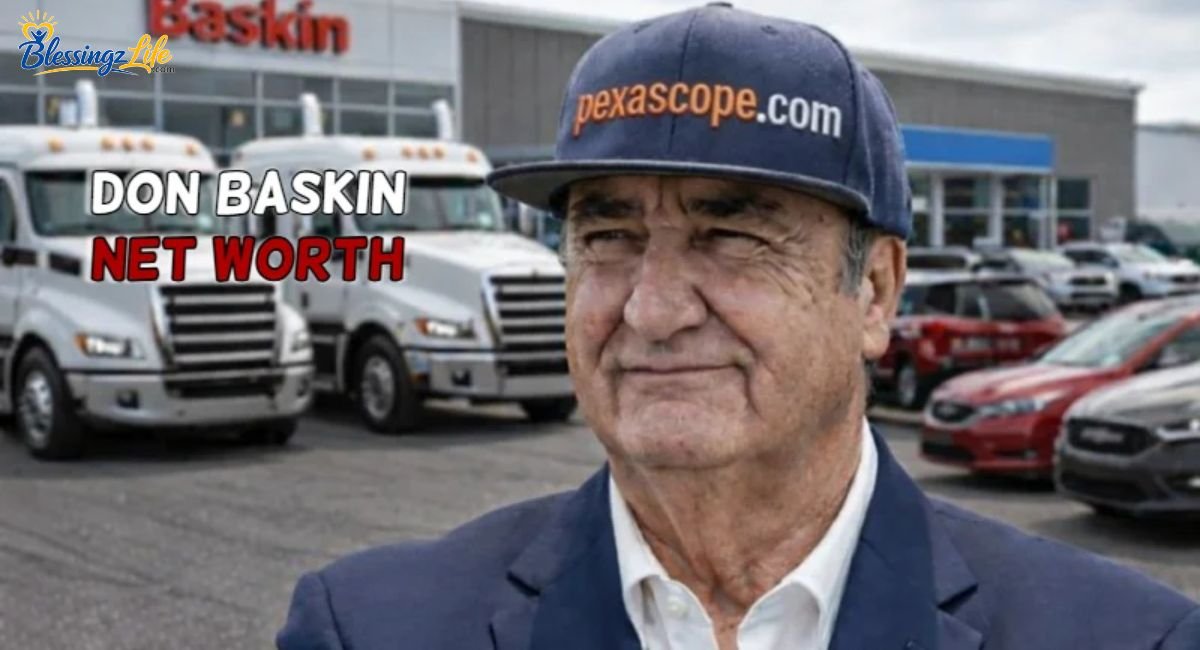

Somewhere in Covington, Tennessee, more than 1,000 cars sit inside private warehouses — including a vehicle that once carried President John F. Kennedy. The man who owns them also runs one of the largest commercial truck dealerships in the American Southeast and has won 14 to 15 world drag racing championships. Most people have never heard of him — and that is exactly how he built his fortune.
Don Baskin is not a celebrity and not a Silicon Valley name. He is a self-made Tennessee businessman whose estimated don baskin net worth sits between $100 million and $500 million in 2026 — built quietly over nearly 50 years, one truck deal, one rare car, and one championship at a time.
Don Baskin Bio Profile

Donald M. Baskin III was born and raised in Tennessee, and everything about his professional life reflects a deep connection to the state where he built his empire. He did not leave for a bigger market or chase opportunities in larger cities. He stayed in Covington, Tennessee, built his business there, employed people from that community, and became one of the most significant private business figures in the region. At 68 years old in 2026, he still races competitively, still runs his dealership, and still adds to a car collection that has grown to more than 1,000 vehicles. That level of sustained engagement with three demanding pursuits simultaneously — business, collecting, and competitive racing — says something meaningful about the man behind the net worth figure.
What makes Don Baskin’s profile genuinely interesting is the coherence of it. Every major element of his professional life connects to the others. His love of cars fed his interest in trucks. His trucking business funded his car collection and his racing career. His racing success built credibility and community relationships that fed back into his business reputation. Baskin Motorsports, the racing equipment venture he founded, monetized his expertise on the track and opened another revenue stream. This is not a man who stumbled into wealth through one lucky break. It is someone who built multiple interlocking pursuits into a self-reinforcing system over nearly five decades.
| Attribute | Details |
|---|---|
| Full Name | Donald M. Baskin III |
| Age (2026) | 68 years old |
| Birthplace | Tennessee, United States |
| Location | Covington, Tennessee |
| Occupation | Businessman, Truck Dealer, Car Collector, Drag Racer |
| Company | Don Baskin Truck Sales LLC |
| Net Worth (2026) | $100M–$500M (estimated) |
| Car Collection | 1,000+ vehicles |
| Racing Titles | 14–15 World Championships |
| Employees | Approximately 125 |
| Years in Business | Nearly 50 years |
TheSource of the Wealth of Don Baskin.
The foundation of don baskin net worth is Don Baskin Truck Sales, a commercial truck dealership that has been operating out of Covington, Tennessee for nearly 50 years. That kind of longevity in a capital-intensive, relationship-driven industry is not accidental. It is the product of deep market knowledge, consistent execution, and a reputation built over decades of transactions with buyers and sellers across the southeastern and Midwest United States. The dealership’s annual revenue is estimated between $10 million and $100 million depending on market conditions and sales volume, with financial analysts generally settling on a conservative mid-range of $10 to $25 million in typical years. In strong market years — when construction activity is high and demand for commercial vehicles spikes — the upper end of that range becomes more realistic. The dealership reportedly moved approximately 3,600 trucks in a single year at its peak, which is an extraordinary volume for a regionally based independent operation.
Understanding why the don baskin net worth range is so wide requires understanding how analysts value a private business like Don Baskin Truck Sales LLC. Private companies are typically valued at a multiple of annual earnings — somewhere between 3x and 8x depending on the industry, growth trajectory, and asset base. If the dealership generates $20 million annually and is valued at 5x earnings, that single asset is worth $100 million on its own — before accounting for the car collection, the real estate, the salvage yard, or the racing business. Add the full picture of his asset portfolio and the $500 million upper estimate becomes less surprising, even if it remains an optimistic one. The honest answer is that the real don baskin net worth figure sits somewhere in the middle of the reported range, and the exact number will never be publicly confirmed because he has no obligation to disclose it.
| Estimate Type | Figure | Basis |
|---|---|---|
| Conservative Estimate | $100M–$150M | Business earnings multiple, known assets |
| Mid-Range Estimate | $200M–$300M | Includes car collection and real estate |
| Upper Estimate | $400M–$500M | Peak asset valuation, optimistic multiples |
| Car Collection Alone | $40M–$50M+ | Rare vehicles, COPO Camaros, JFK Lincoln |
| Annual Revenue (Dealership) | $10M–$100M | Market-dependent, volume-based |
Read More: Keisha Combs Net Worth: The Quiet Success Behind Diddy’s Sister
Company Business and Diversification.
Don Baskin Truck Sales is not a single-function dealership. It operates across several connected business lines that each generate revenue independently while reinforcing the others. The primary business is the sale of new and used commercial truck dealership inventory — including dump trucks, mixer trucks, asphalt trucks, concrete trucks, flatbed trailers, dozers, and farm machinery. This is the volume engine of the operation, the part that moves thousands of units per year and generates the consistent cash flow that funds everything else. But the business model goes significantly deeper than retail truck sales, and that depth is a large part of why don baskin net worth has grown so consistently over decades rather than being dependent on any single revenue stream.
The salvage yard operations attached to don baskin truck sales represent one of the most underappreciated elements of his business model. A salvage yard does not just generate revenue from parts sales — it functions as a strategic complement to the dealership in ways that most outside observers miss. When a truck comes in that is not retail-ready, the salvage yard gives the business a profitable exit option rather than a write-off. Parts pulled from salvaged vehicles can be sold individually at margins that often exceed what the whole truck would have generated as a retail unit. Custom truck building adds another high-margin layer — building specialized vehicles for fire departments, construction companies, and municipal buyers is exactly the kind of work that commands premium pricing because the buyers are institutional, the specifications are exact, and the relationship tends to be repeat business. Together, these three channels — retail sales, salvage, and custom builds — create a business that is far more resilient than a simple truck lot.
Legendary Car Collection of Don Baskin.
The car collection of Don Baskin is where his story crosses from impressive business success into something genuinely extraordinary. More than 1,000 vehicles stored across warehouse space totaling between 270,000 and 440,000 square feet — that is not a hobby that got out of hand. That is a deliberate, decades-long accumulation of automotive history that functions simultaneously as a personal passion and a significant appreciating asset. The collection competes directly with well-known automotive museums in terms of breadth and rarity, the difference being that Don Baskin’s collection is privately held and largely unseen by the general public. The estimated value of the collection sits between $40 million and $50 million at conservative appraisal, but that figure almost certainly understates the real value once rare and historically significant vehicles are properly assessed by specialist appraisers.
What separates Don Baskin’s collection from the average wealthy car enthusiast’s garage is the combination of depth and specificity. He is not collecting randomly across all makes and eras. His collection is anchored by a profound focus on American muscle cars — particularly Chevrolet products — accumulated over a lifetime of genuine enthusiasm rather than investment-driven acquisition. That focus creates a collection with real coherence and historical significance rather than a random assortment of expensive cars. The financial logic of holding this many vehicles is also sound: rare car collection assets, particularly unrestored originals and factory-special production models, have appreciated dramatically over the past two decades as the demographic of buyers who grew up with these cars has reached peak earning years. A collection assembled over 40 or 50 years at purchase prices that predate that appreciation wave is sitting on enormous unrealized gains.
Collection Highlights
The crown jewel of the COPO Camaro collection deserves a proper explanation because most people encounter the term without understanding what makes these vehicles so significant. COPO stands for Central Office Production Order — a factory ordering system that allowed fleet buyers to request configurations not available through standard dealership channels. In the late 1960s, a handful of savvy buyers used this system to order Camaros with engines that were not supposed to be available in that body — most notably the 427 cubic inch big-block engine. The result was a factory-built drag racing weapon that came with a standard Camaro body, no performance badging, and devastating straight-line performance. Don Baskin owns three unrestored 1969 COPO Camaros alongside two 2012 COPO models with VINs number 10 and 66 — the low VIN numbers on the modern versions indicating they were among the very first produced in that revival run, which carries its own collector premium.
Beyond the COPO Camaro collection, the breadth of what Don Baskin holds is remarkable. His Chevrolet focus means approximately 80 Camaros — including the third 1967 Camaro ever manufactured, which retains its original six-cylinder engine and three-speed column shifter, making it a historically significant survivor rather than a typical collector car. He holds 20 Corvettes, 20 Chevy Novas, 25 Dodge Hellcats, 10 Buick Grand Nationals, unrestored 1969 GTO Judges including a rare convertible, and a 1967 Impala SS427 convertible that his father originally ordered. The historical significance of the collection extends beyond American muscle: a 1961 Lincoln Continental staff car that served President John F. Kennedy sits in the collection as a piece of genuine American political history. Each of these vehicles carries a story, and the combination of rarity, originality, and historical provenance makes this collection far more valuable than a simple unit count suggests.
| Vehicle | Significance | Estimated Value Range |
|---|---|---|
| 1961 Lincoln Continental (JFK Staff Car) | Presidential historical artifact | $500K–$2M+ |
| 3rd 1967 Camaro Ever Manufactured | Extreme production rarity | $200K–$500K+ |
| 1969 COPO Camaros (3 unrestored) | Factory drag racing originals | $150K–$400K each |
| 2012 COPO Camaros (VIN #10 and #66) | Ultra-low VIN modern revival | $80K–$150K each |
| 1969 GTO Judge Convertible | Rare convertible configuration | $150K–$350K+ |
| Buick Grand Nationals (10 units) | Turbocharged muscle era icons | $40K–$80K each |
| 1967 Impala SS427 Convertible | Personal family history piece | $100K–$250K+ |
Career and Championships in racing
Don Baskin’s drag racing career began at age 16 and has never stopped — which, at 68 years old in 2026, means he has been competing on drag strips for over 50 years. That kind of sustained competitive commitment is rare in any sport, and it tells you something important about what racing means to him beyond the trophies. Drag racing in the context of someone who also runs a major commercial truck dealership and manages a 1,000-car collection is not a weekend distraction. It is a core identity — and that identity has business consequences that are easy to underestimate. The drag racing community in the American Southeast is a tight, loyal network of enthusiasts, mechanics, fabricators, and business owners. Being a respected and championship-winning figure in that community builds a form of credibility and trust that no advertising budget can replicate.
The competitive context of Don Baskin’s racing matters for understanding his broader story. NMCA and NHRA competition are not casual bracket racing events at the local strip. The NMCA world championship and NHRA competition at the national level involve serious engineering, significant investment, and genuine athletic skill. Winning 14 to 15 world championships across multiple classes over a multi-decade career places Don Baskin among the most accomplished amateur drag racers in the country. The fact that he achieved this while simultaneously building a business empire and assembling one of America’s largest private car collections makes it even more remarkable — not because it makes him superhuman, but because it demonstrates the kind of focused, disciplined execution that explains why everything else he has built is also exceptional.
Championship Achievements
The 2014 NMCA Nitrous Pro Street championship is often cited as a highlight of Don Baskin’s racing record, but it represents just one data point in a career spanning multiple organizations, multiple classes, and multiple decades. His total of 14 to 15 world championships across NMCA world championship and NHRA competition events covers classes including NHRA Comp Eliminator and various NMCA heads-up categories. Comp Eliminator is one of the most technically demanding classes in NHRA competition because it requires drivers to run extremely precise elapsed times across different vehicle configurations — it rewards consistency and mechanical precision as much as raw power. Winning consistently in that environment over decades requires not just a fast car but a deep understanding of vehicle tuning, atmospheric conditions, track preparation, and race-day decision-making.
What these championship achievements contribute to don baskin net worth is indirect but real. In the commercial truck and specialty vehicle business, reputation is currency. A buyer choosing between two dealerships — one run by a well-known regional figure with decades of community presence and a championship racing record, the other a faceless operation — will typically lean toward the one with the established name. Don Baskin’s racing profile has kept his name visible in the automotive and commercial vehicle community for 50 years in a way that reinforces business trust without costing a dollar in traditional advertising. That intangible brand value is genuinely difficult to quantify, but it would be a mistake to exclude it from any serious analysis of why Don Baskin Truck Sales has sustained itself so successfully for so long.
Baskin Motorsports
Baskin Motorsports is the commercial extension of Don Baskin’s racing passion — a business that sells racing equipment, engines, parts, and trailers to the drag racing community. The strategic logic here is elegant: after decades of competitive racing, Don Baskin has accumulated technical knowledge, supplier relationships, and a reputation in the racing community that most equipment dealers cannot match. When a serious drag racer is looking for a trailer or a set of components from someone who actually knows what those components do under race conditions, Baskin Motorsports has a credibility advantage that no marketing budget can buy. This is the same pattern that runs through his entire business life — expertise accumulated through genuine engagement, converted into commercial advantage.
Baskin Motorsports also functions as a community anchor that keeps Don Baskin embedded in the racing equipment business ecosystem regardless of how his competitive schedule evolves with age. It generates revenue from a customer base that is passionate, knowledgeable, and loyal — drag racers tend to buy from people they respect within the community rather than from anonymous online retailers. The business contributes to don baskin net worth both through direct revenue and through the reputational halo it creates around everything else he does. A man who races at the national championship level, sells parts to serious competitors, and has been building and tuning cars since the 1970s carries a kind of mechanical authority that makes his commercial truck dealership more credible to buyers who know their equipment.
The Man who Made his Fortune: How Don Baskin
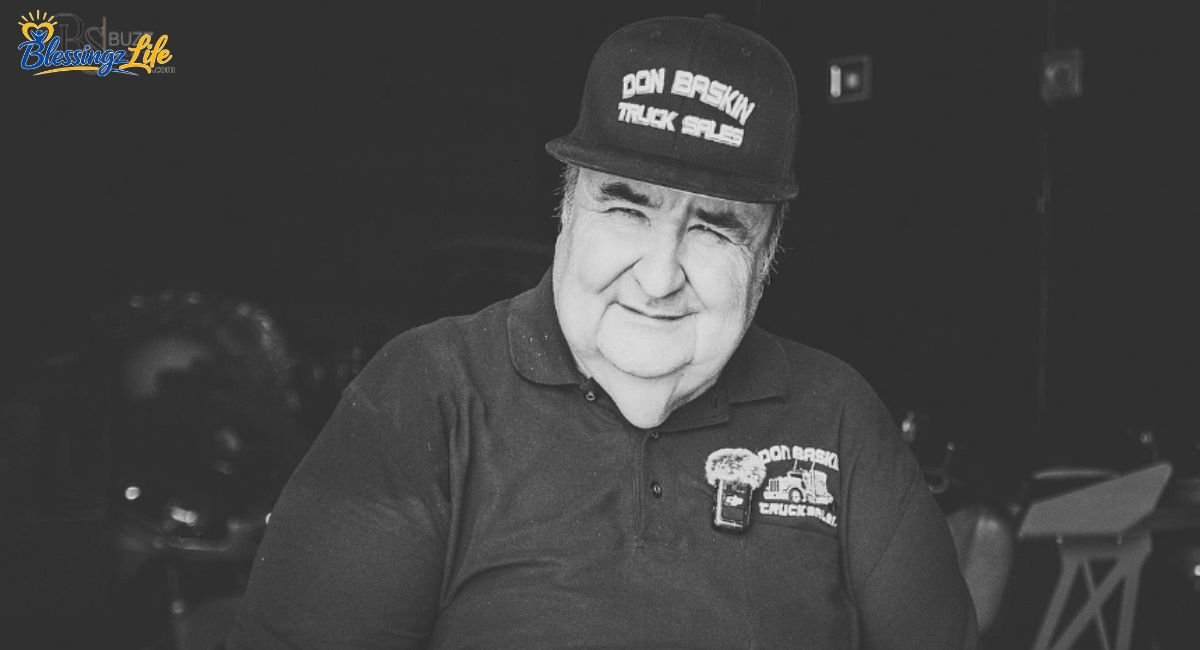
Don Baskin started buying and selling trucks at 16 years old in Tennessee — not as a summer job, but as the beginning of a deliberate commercial education that would eventually produce one of the most successful independent truck dealerships in the southeastern United States. The early years were about learning the market from the ground up: which trucks held value, which buyers needed what configurations, how to source inventory efficiently, and how to build the kind of seller reputation that generates repeat business and referrals. Those foundational years of direct market experience gave him something that cannot be taught in a business school classroom — a calibrated instinct for commercial vehicle value that has informed every major acquisition and business decision he has made since.
The reason don baskin net worth has grown consistently rather than peaking and declining — as many dealership fortunes do — comes down to strategic discipline applied over a very long time horizon. He did not over-expand into markets he did not understand. He did not chase trends outside his core expertise. He deepened his position in the southeastern truck dealer market, added complementary revenue streams through the salvage yard and custom building, and invested the profits into appreciating assets — primarily the car collection and real estate — that have grown in value alongside the business. That combination of operational focus and asset diversification is the actual mechanism behind the wealth figure, and it is a more useful insight than any single net worth estimate.
Growth Timeline
The growth timeline attributed to don baskin net worth shows a steep trajectory in recent years — $200 million in 2022, $300 million in 2023, $400 million in 2024, $500 million in 2025 — but these figures require context to be genuinely useful. These are not audited financial statements. They are analyst estimates that reflect a combination of business valuation modeling, real estate assessment, and car collection appraisal, all of which are subject to significant methodological variation. The $100 million to $150 million conservative estimate from more cautious analysts is arguably more grounded in what can actually be verified from publicly observable information. The truth almost certainly lies somewhere between the conservative and optimistic ranges, and the most intellectually honest position is to treat the entire spectrum as a reasonable boundary rather than pointing to any single figure as definitive.
What the growth timeline does capture accurately, even if the specific numbers are estimates, is the directional reality: don baskin net worth has been moving upward consistently, driven by multiple compounding factors. The commercial vehicle empire has benefited from strong construction and infrastructure spending cycles that drove demand for exactly the kinds of trucks Don Baskin Truck Sales specializes in. The rare car collection has appreciated significantly as the collector car market reached new highs during the pandemic-era asset boom and sustained elevated values since. The real estate holdings have grown in value alongside broader commercial property appreciation. Each of these asset classes has been moving in the same direction simultaneously, which explains why even the conservative estimates place him firmly in the nine-figure range.
Strategic Advantages
The location advantages of Don Baskin Truck Sales in Covington, Tennessee are more significant than they might appear on a map. Covington sits approximately 40 miles north of Memphis, which places it at a distribution crossroads between the Midwest and Southeast markets. Commercial vehicle buyers from a wide geographic radius can reach the dealership without the logistical complexity of dealing with a major urban dealership. The southeastern truck dealer positioning also means lower operating costs than a comparable operation in a major metro area — real estate, labor, and overhead are all more favorable in Tipton County than they would be in Nashville or Atlanta, and those cost advantages flow directly into margin and competitive pricing capability.
The deeper strategic advantage that most coverage of Don Baskin underweights is the relationship network built over nearly 50 years in the same market. Commercial truck buyers are not random consumers making one-time purchases. They are fleet operators, construction company owners, contractors, and agricultural businesses that buy repeatedly over decades. A relationship with a trusted dealer who has been in the market since the 1970s is genuinely valuable to those buyers — and that accumulated trust is an asset that does not appear on any balance sheet but contributes significantly to don baskin net worth by generating repeat business and referrals that no competitor can easily replicate. His connection to Ritchie Brothers Auctions for inventory sourcing adds another strategic layer: access to a global auction pipeline means the dealership can source specialized inventory that smaller regional competitors simply cannot match.
Real Estate and Other Assets.
The real estate component of don baskin net worth is substantial even though the specific figures remain private. The Don Baskin Truck Sales facility in Covington, Tennessee occupies more than 50 acres of commercially zoned land — a holding that represents significant value in its own right given the size, location, and commercial zoning status. Commercial real estate on a major highway corridor in a growing regional market does not depreciate. It appreciates with regional economic development, infrastructure investment, and the general upward trajectory of commercial land values in markets adjacent to major population centers. The 50-acre footprint of the dealership alone, assessed at current commercial rates for the region, represents a multi-million dollar asset before a single truck or tool is counted.
The warehouse real estate assets that house the car collection add another meaningful layer. Storage space totaling between 270,000 and 440,000 square feet is an enormous physical footprint — the equivalent of five to ten large commercial warehouses. That space has dual value: it protects and preserves a car collection worth tens of millions of dollars, and it represents significant real estate equity that could be monetized independently if the collection were ever consolidated or relocated. Don Baskin has effectively been building a real estate portfolio alongside his business and collection portfolio, even if the real estate was originally acquired to serve operational purposes. In markets where industrial and warehouse space has seen significant appreciation over the past decade, the warehouse real estate assets component of his overall wealth picture is likely larger than most analysts give credit for.
Industry Peer Comparison.
Placing don baskin net worth in the context of industry peers requires distinguishing between different comparison categories, because Don Baskin is simultaneously a commercial truck dealer, a car collector, and a motorsports figure — and the relevant comparisons are different for each dimension. Within the commercial truck dealership sector, independent regional operators rarely reach the wealth levels that Don Baskin has achieved. Most independent truck dealerships are acquired by national chains or consolidators before they reach the scale that Don Baskin Truck Sales has maintained independently. The fact that he has preserved the business as a private, family-controlled operation while growing it to the estimated size it has reached is genuinely unusual in the industry and reflects both the strength of his market position and his resistance to the short-term valuation offers that typically lead founders to sell.
The celebrity car collection comparison that most naturally presents itself is Jay Leno, whose collection of approximately 180 vehicles across cars and motorcycles is among the most famous in America. Don Baskin’s collection of 1,000+ vehicles is more than five times larger by unit count, though Jay Leno’s collection is estimated to be worth approximately $50 million to $100 million due to the high concentration of extremely valuable and rare vehicles. Don Baskin’s collection focus on American car collector muscle and Chevrolet products means his per-unit values are generally lower than Leno’s, but the sheer volume and the presence of genuinely rare pieces — the JFK Lincoln Continental, the COPO originals, the third 1967 Camaro ever built — means the car collection value comparison is closer than the unit count difference might suggest. What distinguishes Don Baskin from most wealthy car collectors is that his collection grew organically from genuine automotive passion rather than being assembled as a wealth management strategy — which makes it more coherent and, in many ways, more historically significant.
| Comparison | Don Baskin | Jay Leno | Typical Regional Dealer |
|---|---|---|---|
| Car Collection Size | 1,000+ vehicles | ~180 vehicles | Minimal personal collection |
| Collection Value Est. | $40M–$50M+ | $50M–$100M | N/A |
| Business Focus | Trucks, commercial vehicles | Entertainment/media | Varies |
| Racing Involvement | 14–15 championships | Enthusiast level | Rare |
| Net Worth Est. | $100M–$500M | ~$50M–$100M | Typically under $10M |
| Collection Focus | American muscle, Chevrolet | Broad, international | N/A |
The Tiger King Confusion
The Tiger King confusion between Don Baskin and the story of Carole Baskin and her missing husband Don Lewis is worth addressing directly and fully because it continues to generate misdirected internet traffic and occasional misreporting. Carole Baskin is the founder of Big Cat Rescue in Florida and became famous through the 2020 Netflix documentary Tiger King. Her first husband, Don Lewis, disappeared in 1997 under circumstances that were never fully explained. The similarity of the last name — Baskin — combined with the first name Don has led countless internet searchers to conflate Donald M. Baskin III of Tennessee with the entirely separate and entirely unrelated story of Don Lewis in Florida. These are two completely different people with no connection to each other beyond a shared surname.
The accidental visibility that the Tiger King confusion generated for Don Baskin Truck Sales during the peak of the documentary’s cultural moment in 2020 is a genuine case study in unintentional marketing. When Tiger King became the most-watched Netflix documentary in history during the early pandemic lockdowns, searches for “Don Baskin” spiked dramatically — and a meaningful portion of those searchers discovered the Tennessee truck dealer rather than the Florida missing persons story they were looking for. Whether that traffic translated into measurable business leads is impossible to quantify, but the exposure introduced don baskin truck sales to an audience that would never have encountered the dealership through normal commercial vehicle industry channels. In an era where digital visibility is genuinely difficult to generate for regional industrial businesses, that kind of organic search surge — even misdirected — has real value.
Business Problems and Image.
Any honest assessment of Don Baskin Truck Sales has to acknowledge that a high-volume commercial dealership operating over nearly 50 years will accumulate some customer complaints and reputational friction — that is true of virtually every business operating at scale over a long period, and Don Baskin’s operation is no exception. Some customers have reported purchasing trucks that required significant repairs shortly after acquisition, while others describe straightforwardly fair dealings and quality inventory. The pattern that emerges from available customer feedback is consistent with what industry analysts know about the high-volume truck auction model: vehicles sourced through auction pipelines like Ritchie Brothers Auctions represent a wide quality spectrum, and buyers who do not perform thorough pre-purchase inspections sometimes discover issues that were technically their responsibility to identify before purchase.
The Ritchie Brothers Auctions sourcing relationship is actually key to understanding both the volume capability and the quality variability of Don Baskin Truck Sales. Approximately 90 percent of the dealership’s inventory reportedly passes through auction channels, which means the business operates on a fundamentally different model than a franchise dealership with manufacturer-backed certified inventory. This model allows for much higher volume and much broader inventory diversity — you can source specialized equipment that no franchise dealer carries — but it also means that condition varies more widely than in a franchise context. For buyers who understand how to inspect commercial vehicles and do their due diligence, this model offers genuine value and access to inventory that does not exist elsewhere. For buyers who expect franchise-dealership guarantees on auction-sourced equipment, the experience can be disappointing. Understanding this dynamic is essential for anyone researching don baskin truck sales before making a purchase decision — and presenting it honestly is more useful than either dismissing complaints or treating them as evidence of systemic bad practice.
Legacy and Future Outlook
The legacy of Don Baskin is already secured by the simple fact of what he has built and sustained over nearly 50 years in a demanding industry. A commercial vehicle empire that employs approximately 125 people in Covington, Tennessee — providing stable, skilled-trade employment in a community that depends on exactly that kind of economic anchor — is a meaningful contribution to a region regardless of the net worth figure attached to the owner. His car collection, whatever its ultimate fate, preserves automotive history in a way that serves future generations of enthusiasts, historians, and collectors. The 1961 Lincoln Continental that once served in the motorcade of President John F. Kennedy, the third Camaro ever built, and three unrestored 1969 COPO Camaros are pieces of American history that exist today in better condition because Don Baskin valued them enough to acquire and preserve them.
The future outlook for don baskin net worth depends on several converging factors that are each individually favorable. The collector car market for American muscle has shown remarkable resilience even through broader economic downturns, and the specific vehicles Don Baskin holds — originals, unrestored examples, low-production variants — are precisely the segment of the market that tends to hold value best. The commercial truck market cycles with infrastructure and construction spending, and the ongoing federal infrastructure investment cycle in the United States suggests continued demand for the equipment Don Baskin Truck Sales specializes in. At 68 and still racing competitively, there is no indication that Don Baskin is preparing to wind down — which means the business is likely to continue operating at its established scale for the foreseeable future. The real question about his legacy is not whether the wealth will continue to grow — the structural conditions suggest it will — but what eventually happens to the 1,000-car collection that represents one of the most significant privately held archives of American automotive history in existence.
FAQs
What will be the net worth of Don Baskin in 2026?
Don Baskin net worth in 2026 is estimated between $100 million and $500 million. Most credible mid-range estimates place the figure around $200 million to $300 million when accounting for Don Baskin Truck Sales, his rare car collection, and warehouse real estate assets.
What was the source of income of Don Baskin?
Don Baskin built his wealth primarily through Don Baskin Truck Sales LLC, a nearly 50-year-old commercial truck dealership in Covington, Tennessee. Additional income comes from salvage yard operations, custom truck building, and Baskin Motorsports.
What is the number of cars that Don Baskin possesses?
Don Baskin owns more than 1,000 vehicles stored across 270,000 to 440,000 square feet of warehouse space. His COPO Camaro collection, approximately 80 Camaros, 20 Corvettes, 25 Dodge Hellcats, and 10 Buick Grand Nationals are among the most notable holdings.
Is Don Baskin the brother to Carole Baskin of Tiger King?
No. Don Baskin of Tennessee has absolutely no connection to Carole Baskin or her missing husband Don Lewis from the Tiger King documentary. The Tiger King confusion arises entirely from the shared surname and has been a persistent source of internet misdirection.
Which champion racing championships has Don Baskin won?
Don Baskin has won 14 to 15 world championships across NMCA world championship and NHRA competition events, including the 2014 NMCA Nitrous Pro Street title. His career spans multiple classes including NHRA Comp Eliminator and various NMCA heads-up categories.
What is the location of Don Baskin Truck Sales?
Don Baskin Truck Sales is located in Covington, Tennessee, approximately 40 miles north of Memphis. The dealership occupies more than 50 acres and serves truck and trailer sales customers across the southeastern and Midwest United States.
What is the priciest car in the collection of Don Baskin?
The most historically significant and likely most valuable vehicle in Don Baskin’s collection is the 1961 Lincoln Continental staff car that served President John F. Kennedy. The three unrestored 1969 COPO Camaros and the third 1967 Camaro ever manufactured are also among the most valuable pieces in the rare car collection.
Conclusion
Don Baskin built a nine-figure fortune the way most lasting wealth actually gets built — through deep expertise in one industry, sustained over decades, with profits reinvested into assets that compound quietly in the background. His Don Baskin Truck Sales empire, 1,000-car collection, and drag racing legacy are not separate achievements. They are three expressions of the same disciplined, passionate, and deeply focused approach to everything he has ever touched.
The real takeaway from don baskin net worth is not the number — it is the method. Stay in your market, know it better than anyone else, build assets that outlast you, and never stop doing what you love. Don Baskin has been proving that formula works for fifty years, and the warehouses full of rare cars in Tennessee are just the most visible evidence of it.



[…] Read More: Don Baskin Net Worth: The Truck Empire Behind His 1000+ Car Collection […]